An Alien Orbiting Earth Gave Me Extraordinary, Counterintuitive Leadership Advice.
May 7
Here’s my predicament. An alien gave me advice on how to make my coaching business extraordinary and I can’t thank him enough. Yes, I do know the alien was male.
You’re right to be sceptical. The strongest predictor of false recall is a vivid imagination, according to a Harvard study on alien abduction. But for now, let’s call him Chris and let him tell the story in his own words. "Six seconds to go. The engines start and it feels as if we're being shaken in a huge dog’s jaws, then seized by an unseen giant and hurled straight into the sky.
50% of the risk of a catastrophic failure during a mission occurs in the first 10 minutes after lift off.
Hundreds of complex, integrated systems are interacting with split second precision and if even one variable changes it can have a ripple effect. We know that per second, it’s the most dangerous phase of space flight."
I am in space, weightless. Getting here took only 8 minutes and 42 seconds. Give or take 5,000 days of training".
10 Space Travel Lessons That Create Amazing Business Leaders
Becoming an astronaut, someone who reliably makes good decisions when the consequences really matter is not something anyone can confer on you.
It takes years of serious, sustained effort, because you need to build a new knowledge base, develop your physical capabilities and dramatically expand your technical skills sets.
But the most important things you need to change?
Your mind. You need to learn to think like an astronaut.
Lesson 1: Push past the fear
"Here’s the problem. I’m afraid of heights.
How can I possibly do my job when just being on a cliff edge triggers primal fear?
I learned to push past the fear. Through flying, I learned to override that sensation with reason, knowledge and experience. In each case, I fully understand the physics, the mechanics and from personal experience that I’m not helpless. I do have some control.
People tend to think that astronauts have the courage of a super hero or the emotional range of a robot. But in order to stay calm in a high stress, high stakes situation, all you need is knowledge".
Lesson 2: Get ready. Always be ready.
To me, it’s simple. If you’ve got the time, use it to get ready. I never stopped getting ready. Just in case. The best insurance policy on our lives is our own dedication to training. The possibility of a sequel is non existent. Four examples:
Interview skills: I figured out the 100 things they might ask me and practised my answers. Then I practised them in French.
I completed an advanced degree working weekends and evenings to get a Masters in Aviation Systems. I learned and became fluent in French and Russian. I volunteered for lots of extra classes which bulked up my qualifications and increased my opportunities for NASA.
Test pilot school was like getting a PHD in flying – in a single year we flew 32 different types of planes and were tested every day. I tested F-18s’ deliberately putting them out of control way up high, then figuring out how to recover as they fell to earth.
We are taught to think more critically and analytically to question rather than simply try to get the right answers. We learned how to learn.
Lesson 3: The power of negative thinking.
Why do so many self help gurus urge you to visualise victory and only wish for good things long and hard enough to obtain them?
I think it’s seductively misleading to talk about expecting the best but preparing for the worst. Anticipating problems and figuring how to solve them is the opposite of worrying – it’s productive and even better to have a plan for dealing with a whole spectrum of unpleasant possibilities.
My optimism and confidence come not from visualising victory but visualising defeat and how to prevent it.
Lesson 4: Competence IS confidence.
The critical skill we need is being competent so you can make good decisions quickly with incomplete information when the consequences really matter. You need to keep calm in a crisis, sticking to a task even when it seems hopeless, improvising good solutions to tough problems when every second counts.
The qualities that help? Being ingenious, determined and prepared for anything. Whenever something goes wrong, and something always does, it’s going to happen fast and your survival depends on the competence you’ve gained.
The worst time is during “dynamic operations” such as launch, docking, re-entry and landing, when variables change rapidly, triggering chain reactions that unfold very quickly.
You must understand what event causes which effect and you don’t even have a few seconds to wrack your brain – you need that information RIGHT now, front of mind, to make a potentially life changing decision.
Competence is critical. After all, it IS rocket science.
Lesson 5: Sweat the small stuff or you’re dead.
In life, you have two options – either you don’t obsess over the small stuff, roll the dice and accept whatever happens. You waste so much time and you never make progress but so many people do this.
But if you chase excellence, whether it’s running a business, living a fulfilled life, flying a jet or learning to play the saxophone, over preparation is the best chance of improving your odds.
Many techniques we learn are counterintuitive – we reduce stress by sweating the small stuff.
We're trained to imagine the worst thing that could possibly happen and when we do simulations, the most important question we learn to ask ourselves is, “what’s the next thing that will kill me?”
Lesson 6: You NEED Harsh Criticism
When we prepare, hundreds of people measure our performance to dissect what went wrong or was handled poorly, system by system. De-personalising personal criticism is a basic survival skill and the goal is build up collective wisdom by drawing attention to our own mistakes and miscalculations.
If you’re in management, create a climate where owning up to mistakes is encouraged.
Lesson 7: Don’t Wing It
Early success is a terrible teacher – you’re typically rewarded for a lack of preparation so when you find yourself in a position when you must prepare, you can’t do it because you don’t know how.
Even the most gifted person in the world will at some point cross a threshold where it’s no longer possible to wing it – the volume of complex information and skills is simply too great to figure it out randomly.
Some people push themselves to the point of discomfort and beyond by buckling down and learning, whereas others don’t do it or know how to do it and soon fall behind.
Lesson 8: Think Like an Astronaut – Preparation Is Everything
It’s absolutely critical that when you do a space walk, you try and avoid snagging your spacesuit or get your cables crossed together and present yourself to the universe like a trussed up roped calf.
Even worse, if there is a leak in our suits, our lungs would rupture, our eardrums would burst, our saliva, sweat and tears would boil and we’d get the bends. The good news is that within 10-15 seconds we’d be unconscious and the lack of oxygen to our brains would kill us. How do we avoid this? We practice what we’ll do for every single operation, whether it’s checking air supplies, engine trouble or an explosion. Being forced to confront the prospect of failure head on – to study it, to dissect it, tease apart all its components and consequences – really works.
We’re trained to respond unemotionally by immediately prioritizing threats and methodically seeking to defuse them. We practice a “warn, gather, work” protocol for understanding what’s wrong, then fix it.
Lesson 9: Aim to be a zero.
In any new situation, you’re viewed in one of 3 ways. As a -1, someone who creates problems, actively harmful. As a 0, your impact is neutral and doesn’t tip the balance one way or another. Or you’ll be a +1, someone who actively adds value.
How do you become a +1?
Bring a wealth of experience and knowledge to everything you do, conduct yourself as if no task is beneath you and act as if you consider yourself a 0, proving to others that you’re competent before you persuade them you’re extraordinary.
One benefit of aiming to be a 0? It’s an attainable goal. The ideal entry is not to sail in and make your presence known immediately.
It’s about learning to ingress without causing a ripple. If you’re really observing and trying to learn rather than impress, you may actually get the chance to do something useful.
Lesson 10: A Lesson In Life On Earth.
By the time we landed, after 146 days in space, we’d orbited Earth 2,336 times, and travelled 62 million miles.
When we got back to Earth, a lot of people asked if everything had gone the way we’d planned. The truth is nothing went as we’d planned but everything was within the scope of what we’d prepared for.
A funny things happened on the way to space – I learned how to live better and more happily on earth. Over time, I learned how to anticipate problems in order to prevent them and how to respond effectively in critical situations. I learned how to neutralise fear, how to stay focused and how to succeed.
Success is feeling good about the work you do throughout the long, unheralded journey that may or may not wind up at the launch pad.
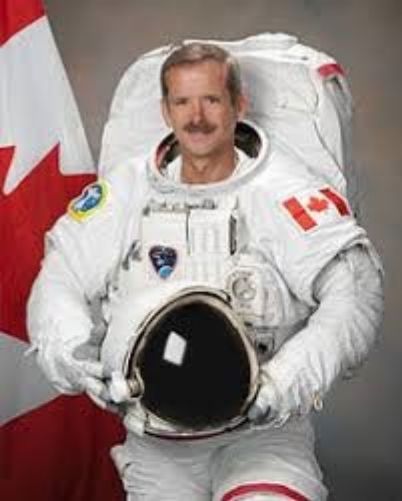
Of course, by now, you may know who the alien is. Say hello to Chris Hadfield, the first Canadian astronaut in space. He spent 35 years as a military pilot and astronaut and his book, "An Astronaut's Guide To Life On Earth" is mind boggling, thought provoking and a study in intelligence, humility and courage.
You may recall the famous You Tube video where Chris sang David Bowie’s Space Oddity. It’s been viewed 55 million times since he recorded it.
“That’s when I notice the Universe. The scale is graphically shocking. The colours too. The incongruence is stupefying. How is this possible? Holding on to the side of a spaceship that’s moving around the Earth at 17,500 miles an hour, I could truly see the astonishing beauty of our planet, the infinite textures and colours. On the other side of me, the black velvet bucket of space, brimming with stars. It’s vast and overwhelming and I could drink it in forever. " Chris Hadfield"
About Chris Pereira:
I coach Senior Manager/Director/Partner-level operators to become expert owned and build high ticket consulting practices selling $50k–$1M+ outcome engagements to Founders and COOs - no procurement theatre, no hustle, no manipulation.
My methods, based on proven business models used by the world's most successful companies, position my clients as "go-to" experts in their field.